
Measurement Conversions
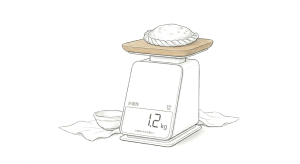
The Science of Baking and the Magic of a Digital Scale
Have you ever wondered why your cookies turned out rock-hard while the photo on the recipe looked soft and chewy? Or why was your cake dry even though you followed the instructions exactly?
The answer usually isn’t the oven temperature or the brand of butter. It comes down to precision.
Baking is not just cooking; it is chemistry. And in a chemistry lab, you don’t use coffee mugs to measure compounds—you use scales. If you want to take your home baking from “hit or miss” to “bakery perfection,” the single most important tool you can own is a digital kitchen scale.
Here is the science behind why weighing your ingredients is the secret to perfect results.
The Problem with Measuring Cups (Volume vs. Weight)
Most of us learned to bake using volumetric measurements like cups and spoons. However, while convenient, this method is inherently inaccurate for dry ingredients.
The issue is density.
Think of a cup of feathers versus a cup of rocks. They take up the same amount of space (volume), but they have vastly different weights. Flour behaves similarly. Depending on humidity, how the flour was stored, and most importantly, how you scoop it, the amount of flour in a “cup” can vary wildly.
The “Scoop” Experiment
If you dip a measuring cup directly into a bag of flour and sweep the top, you are likely packing the flour down.
-
- A “Packed” Cup: Can weigh up to 160 grams.
-
- A “Spoon & Leveled” Cup: Usually weighs around 120 grams.
Why is this important?
If a recipe calls for 1 cup of flour (120g) and you accidentally scoop 150g, you have just added 25% more flour than the recipe intended. In a cookie recipe, that extra starch soaks up all the moisture from the butter and eggs, leaving you with dry, cakey, or crumbly cookies that don’t spread.
The Solution: Baking by Weight (Grams)
When you use a digital kitchen scale, 120 grams of flour is always 120 grams of flour. It doesn’t matter if the flour is sifted, packed, or fluffy—the weight remains constant.
Reasons to Switch to a Scale Today
1. Consistent Results Every Time
The “Science of Baking” relies on specific ratios of fat, sugar, and flour. When you weigh ingredients, you preserve these ratios. You will never have to guess whether you packed the brown sugar tightly enough or chopped the walnuts too small. Grams eliminates the variables.
2. It’s Easier to Scale Recipes
Have you ever tried to calculate “half of 1/3 cup”? It’s a headache. When you bake with grams, halving or doubling a recipe is simple math. If a recipe calls for 300g of flour, you only need 150g.
United States to Metric Baking & Cooking Conversions
|
Oven Temperature Conversions (°C- °F ) |
||
|
Description |
Temperature(°C) |
Temperature (°F) |
|
Cool |
90 °C |
200 °F |
|
Very Slow |
120 °C |
250 °F |
|
Slow |
150 ° to 160 °C |
300 °F to 325 °F |
|
Moderately Slow |
160 ° to 180 °C |
325 °F to 350 °F |
|
Moderate |
180 ° to 190 °C |
350 °F to 375 °F |
|
Moderately Hot |
190 ° to 200 °C |
375 °F to 400 °F |
|
Hot |
200 ° to 230 °C |
400 °F to 450 °F |
|
Very Hot |
230 ° to 260 °C |
450 °F to 500 °F |
|
American Butter Navigating American recipes can be a bit of a puzzle because they often measure butter by the “stick” instead of by weight or volume. To make things easier, just keep these two basic conversions in mind:
Since most American butter wrappers have these measurements printed directly on them, you can usually just slice what you need without ever reaching for a measuring cup. Butter Conversions |
||
|
Cups |
Grams |
Ounces |
|
1/4 cup butter |
57 g |
2 oz |
|
1/3 cup butter |
76 g |
2.7 oz |
|
1/2 cup butter |
113 g |
4 oz |
|
2/3 cup butter |
151 g |
5.3 oz |
|
3/4 cup butter |
170 g |
6 oz |
|
1 cup butter |
227 g |
8 oz |
|
All-Purpose Flour |
|
|
|
Cups |
Grams |
Ounces |
|
1/8 c (2 tbsp) |
16 g |
.56 oz |
|
1/4 cup |
31 g |
1.1 oz |
|
1/3 cup |
42 g |
1.5 oz |
|
1/2 cup |
63 g |
2.2 oz |
|
2/3 cup |
83 g |
3 oz |
|
3/4 cup |
94 g |
3.3 oz |
|
1 cup |
125 g |
4.4 oz |
|
Bread Flour |
||
|
Cups |
Grams |
Ounces |
|
1/8 c (2 tbsp) |
17 g |
0.6 oz |
|
1/4 cup |
34 g |
1.2 oz |
|
1/3 cup |
45 g |
1.6 oz |
|
1/2 cup |
68 g |
2.4 oz |
|
2/3 cup |
91 g |
3.2 oz |
|
3/4 cup |
102 g |
3.6 oz |
|
1 cup |
136 g |
4.8 oz |
|
Cocoa Powder |
|
|
|
Cups |
Grams |
Ounces |
|
1/4 cup |
21 g |
0.75 oz |
|
1/3 cup |
28 g |
1 oz |
|
1/2 cup |
43 g |
1.5 oz |
|
2/3 cup |
57 g |
2 oz |
|
3/4 cup |
64 g |
2.25 oz |
|
1 cup |
85 g |
3 oz |
|
Rolled Oats |
|
|
|
Cups |
Grams |
Ounces |
|
1/4 cup |
21 g |
0.75 oz |
|
1/3 cup |
28 g |
1 oz |
|
1/2 cup |
43 g |
1.5 oz |
|
2/3 cup |
57 g |
2 oz |
|
3/4 cup |
64 g |
2.3 oz |
|
1 cup |
85 g |
3 oz |
|
Sugar (Granulated) |
||
|
Cups |
Grams |
Ounces |
|
1/8 c (2 tbsp) |
25 g |
.89 oz |
|
1/4 cup |
50 g |
1.8 oz |
|
1/3 cup |
67 g |
2.4 oz |
|
1/2 cup |
100 g |
3.6 oz |
|
2/3 cup |
134 g |
4.7 oz |
|
3/4 cup |
150 g |
5.3 oz |
|
1 cup |
200 g |
7.1 oz |
|
Packed Brown Sugar |
||
|
Cups |
Grams |
Ounces |
|
1/4 cup |
55 g |
1.9 oz |
|
1/3 cup |
73 g |
2.6 oz |
|
1/2 cup |
110 g |
3.9 oz |
|
2/3 cup |
147 g |
5.2 oz |
|
3/4 cup |
165 g |
5.8 oz |
|
1 cup |
220 g |
7.75 oz |
|
Rice |
||
|
Uncooked long-grain white rice |
||
|
Cups |
Grams |
Ounces |
|
1/4 cup |
46 g |
1.6 oz |
|
1/3 cup |
62 g |
2.2 oz |
|
1/2 cup |
93 g |
3.3 oz |
|
2/3 cup |
123 g |
4.3 oz |
|
3/4 cup |
139 g |
4.9 oz |
|
1 cup |
185 g |
6.5 oz |
|
Uncooked short-grain white rice |
||
|
Cups |
Grams |
Ounces |
|
1/4 cup |
50 g |
1.8 oz |
|
1/3 cup |
67 g |
2.4 oz |
|
1/2 cup |
100 g |
3.6 oz |
|
2/3 cup |
134 g |
4.7 oz |
|
3/4 cup |
150 g |
5.3 oz |
|
1 cup |
200 g |
7.1 oz |
|
Honey, Molasses & Syrup |
||
|
Cups |
Grams |
Ounces |
|
1/8 c (2 tbsp) |
43 g |
1.5 oz |
|
1/4 cup |
85 g |
3 oz |
|
1/3 cup |
113 g |
4 oz |
|
1/2 cup |
170 g |
6 oz |
|
2/3 cup |
227 g |
8 oz |
|
3/4 cup |
255 g |
9 oz |
|
1 cup |
340 g |
12 oz |
|
Water |
|
|
Cups |
Grams |
|
1/4 cup |
59 g |
|
1/3 cup |
79 g |
|
1/2 cup |
119 g |
|
2/3 cup |
158 g |
|
3/4 cup |
178 g |
|
1 cup |
237 g |
|
Whole Milk |
|
|
Cups |
Grams |
|
1/4 cup |
62 g |
|
1/3 cup |
83 g |
|
1/2 cup |
125 g |
|
2/3 cup |
166 g |
|
3/4 cup |
187 g |
|
1 cup |
249 g |
Source:nist.gov